
Every pro se bankruptcy case in San Diego County runs through one building: the Jacob Weinberger United States Courthouse at 325 West F Street, downtown, home to the U.S. Bankruptcy Court for the Southern District of California.
It’s not an abstraction, it’s a specific clerk’s office, a specific set of local rules, and a specific trustee who will review your paperwork line by line. Filing without a lawyer here doesn’t mean filling out federal forms in a vacuum. It means learning this court’s expectations, on its terms, with no one to catch your mistakes before a judge does.
What Pro Se Filing Looks Like at the San Diego Bankruptcy Court
Filing pro se in the Southern District of California starts with a hard truth: the court will process your case, but it will not help you build it, a gap that experienced bankruptcy attorneys in San Diego exist specifically to close.
The clerk’s office at the Weinberger Courthouse accepts filings, stamps documents, and answers procedural questions — that’s the extent of what federal employees are permitted to do. Everything else, from choosing the right chapter to calculating exemptions correctly, is on you.
The Jacob Weinberger Courthouse and What Clerk Staff Can’t Help With
The Weinberger Courthouse is a 1913 federal building on the National Register of Historic Places, sitting at the corner of F and Union Streets in downtown San Diego. It’s small, historic, and has no on-site parking, most pro se filers either take the trolley or feed a two-hour street meter. Inside, the clerk’s office can tell you which form to use, confirm a filing fee, or explain how to access the CM/ECF electronic filing system. What clerk staff are barred from doing is telling you which chapter to file, how to fill out your schedules, whether an asset is exempt, or what to say at your creditors’ meeting.
Court staff are explicit about this distinction because giving that kind of guidance would amount to practicing law, and the court has no mechanism to make an exception for someone who’s overwhelmed and unrepresented. If you show up expecting a clerk to walk you through your Statement of Financial Affairs, you’ll leave with the same blank form you brought in.
The Legal Aid Society’s Bankruptcy Self-Help Clinic, Explained

The one structured safety net is the Bankruptcy Self-Help Center, run by the Legal Aid Society of San Diego out of the courthouse itself. It’s free, has no income cutoff, and operates by appointment, walk-ins are no longer guaranteed a slot the way they once were on the historic Wednesday afternoon drop-in schedule. The center can help you understand which forms apply to your situation and, in limited circumstances, assist with drafting Chapter 7 paperwork.
What it explicitly will not do is take your case on an ongoing basis or appear with you in court. It’s designed to answer isolated questions, not to manage a filing from petition to discharge. For someone with a straightforward, low-asset Chapter 7, that limited help can be enough. For anyone with a house, a business, non-exempt equity, or a contested debt, it’s a single data point in a process that requires dozens of correct decisions.
Local Forms and Rules You’ll Be Expected to Know
Beyond the federal bankruptcy forms, the Southern District of California maintains its own Local Bankruptcy Rules and a set of local-only forms, creditor matrix requirements, specific notice templates, and administrative procedures that aren’t part of the national form set and won’t show up if you download a generic “bankruptcy petition” template off the internet.
The court is direct about the consequence of getting this wrong: failure to comply with the Local Rules, the Bankruptcy Code, or the Federal Rules of Bankruptcy Procedure can result in dismissal or sanctions, and your signature on every document is a certification under penalty of perjury that its contents are accurate. This isn’t paperwork in the administrative sense, it’s a sworn filing in federal court, and the Southern District treats a self-represented filer’s ignorance of a local requirement the same way it treats anyone else’s.
San Diego Trustees, the 341 Meeting, and Judicial Expectations for Unrepresented Filers
Roughly three to five weeks after filing, you’ll appear at a Meeting of Creditors — a 341 meeting, conducted by video since the district moved to virtual proceedings in mid-2023. It’s run by the case trustee, not a judge, and it typically lasts five to fifteen minutes. The trustee’s job is to confirm your identity, put you under oath, and question you about your schedules: what you own, what you owe, whether anything has changed since filing.
For a represented debtor, an attorney has usually pre-cleared documentation issues with the trustee’s office in advance. For a pro se filer, the trustee is often the first person to catch a missing asset, an inconsistent valuation, or an unlisted account, in real time, on the record. Judges in this district don’t lower the bar for unrepresented filers on substance. Deadlines, disclosure obligations, and exemption rules apply identically whether or not you have counsel; the only accommodation is procedural patience, not a lighter standard.
Why San Diego’s Cost of Living Raises the Stakes of Filing Alone
Bankruptcy law is federal, but the numbers that determine your outcome are local. In a county with some of the highest home values and living costs in the country, the margin for error in a pro se filing is thinner than it is almost anywhere else in California.
Home Equity and Foreclosure Risk in a High-Value Housing Market
California’s homestead exemption protects home equity from creditors, with a statutory floor of $300,000 and a cap of $600,000, adjusted annually for inflation and tied to each county’s median home sale price. Because San Diego County home values sit well above the statewide floor, homeowners here are typically entitled to protection near the upper end of that range — but “typically entitled to” and “correctly claimed” are two different things, and the stakes are especially high for anyone already facing foreclosure timelines while trying to sort this out alone.
The exemption amount depends on the prior year’s countywide median sale price and the current inflation adjustment, both of which change annually and neither of which is printed clearly on any standard form. Understate your equity or misapply the exemption, and a Chapter 7 trustee has a direct incentive to sell your house to recover value for creditors. In a market where a modest San Diego home can carry six figures of equity, a filer who guesses wrong on this calculation isn’t risking a paperwork correction, they’re risking the house.
The Means Test Against Local Income and Expense Realities
The Chapter 7 means test compares your household income against California’s median income figures by household size, figures that update roughly twice a year and currently sit above $77,000 for a one-person household and well over $135,000 for a family of four. San Diego wages often land close to or above those thresholds even for households that don’t feel financially comfortable, given local housing and transportation costs.
Falling above the median doesn’t disqualify you from Chapter 7 — it just triggers a longer, formula-driven version of the test that weighs allowed local and national expense standards against your actual income. Getting this calculation wrong in either direction has real consequences: understate income and risk a bad-faith finding; overstate allowable expenses and risk a U.S. Trustee objection that stalls or converts your case. This is arithmetic done under oath, in a high-cost county where the numbers are close enough that small errors move the outcome.
Picking the Right Chapter When You Have More to Protect Than You Think
Filers who assume Chapter 7 is automatically the “cheaper, faster” option often haven’t accounted for what they’d lose. Non-exempt equity in a home, a vehicle, retirement accounts structured unusually, or a small business interest can all be at risk in a straight liquidation if they exceed California’s exemption limits, limits that are generous by national standards but not unlimited, especially for filers with more than one asset class to protect.
Chapter 13, which restructures debt into a repayment plan instead of liquidating assets, is often the better fit for homeowners trying to catch up on a mortgage or retain equity that exceeds the homestead exemption. Choosing between the two isn’t a preference call; it’s a math problem specific to your asset mix, and it’s one many pro se filers get backwards because they research bankruptcy in general rather than their own balance sheet against San Diego’s actual property values.
How a Small Mistake Becomes a Dismissed Case, and What Happens Next
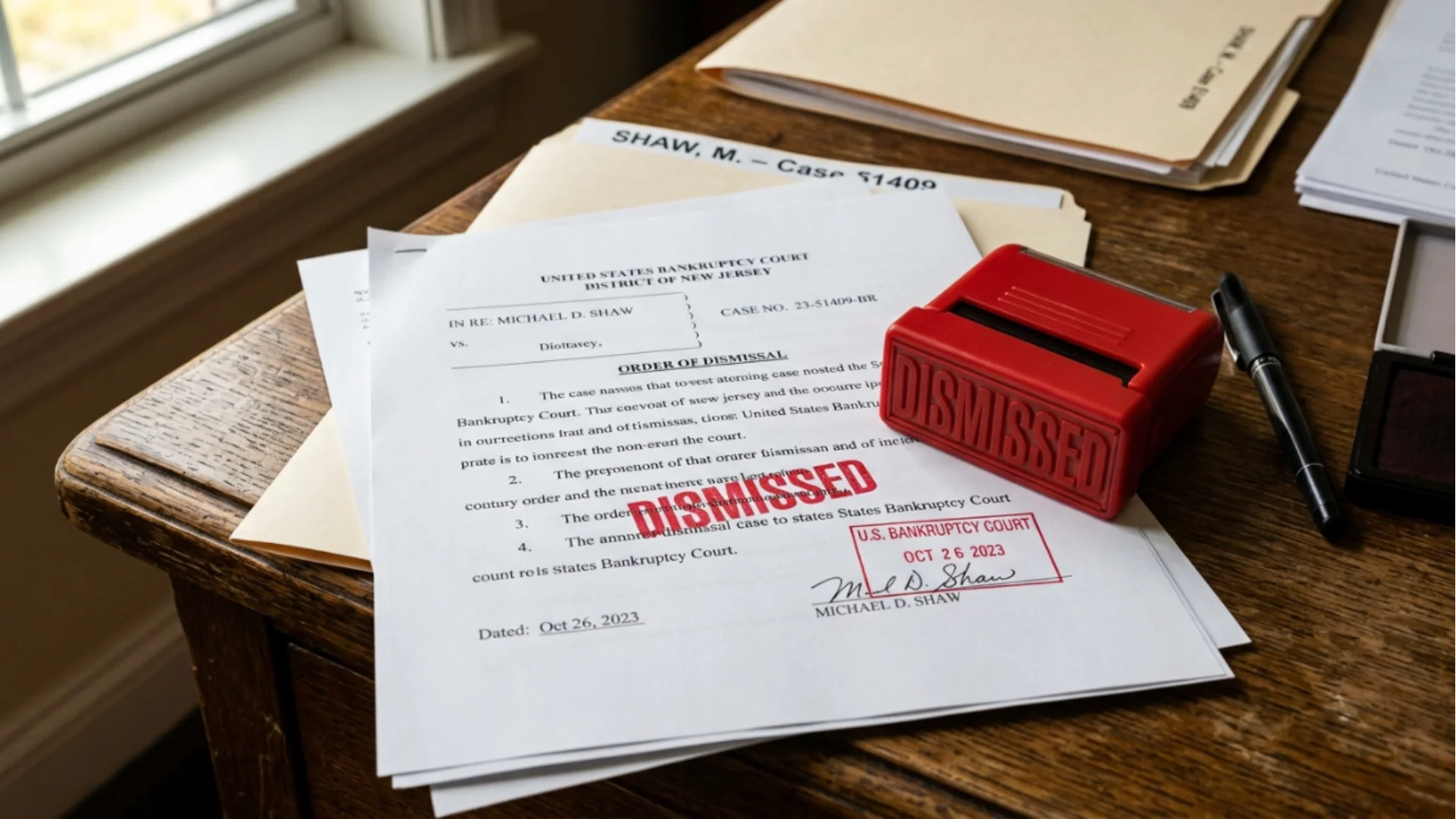
The pattern is consistent: a missed local form, an inaccurate valuation, a missed 341 meeting, or a means test miscalculation leads to a motion to dismiss, and dismissal doesn’t just delay things, it ends the automatic stay that was stopping collection calls, wage garnishment, or a foreclosure sale. Creditors can resume action immediately, including the kind of creditor harassment the automatic stay was supposed to shut down in the first place.
Refiling is possible, but a second filing within a year can carry a shortened or absent automatic stay depending on filing history, which is exactly the kind of local, court-specific procedural detail that doesn’t show up in a generic online bankruptcy guide. In a county where the stakes are a house with real equity in it, a dismissed case isn’t a paperwork setback. It’s the risk you took on by filing alone.
The Local Knowledge Gap Is the Whole Risk
None of this is exotic bankruptcy law, it’s the specific mechanics of one federal courthouse, one set of local rules, and one county’s cost of living. That combination is exactly what a self-help clinic, a generic form, or an out-of-state firm can’t fully replicate.
The filers who come through this process cleanly aren’t the ones who knew the most bankruptcy law in the abstract, they’re the ones who knew how the Southern District of California actually runs.
If you’re weighing whether to file alone, talk it through first. Read what past clients have said about going through this exact court in our testimonials, then schedule a free consultation with attorney at Bankruptcy Law Office of Mark L. Miiler who appear in front of this court regularly and know exactly what its trustees, judges, and local rules expect.