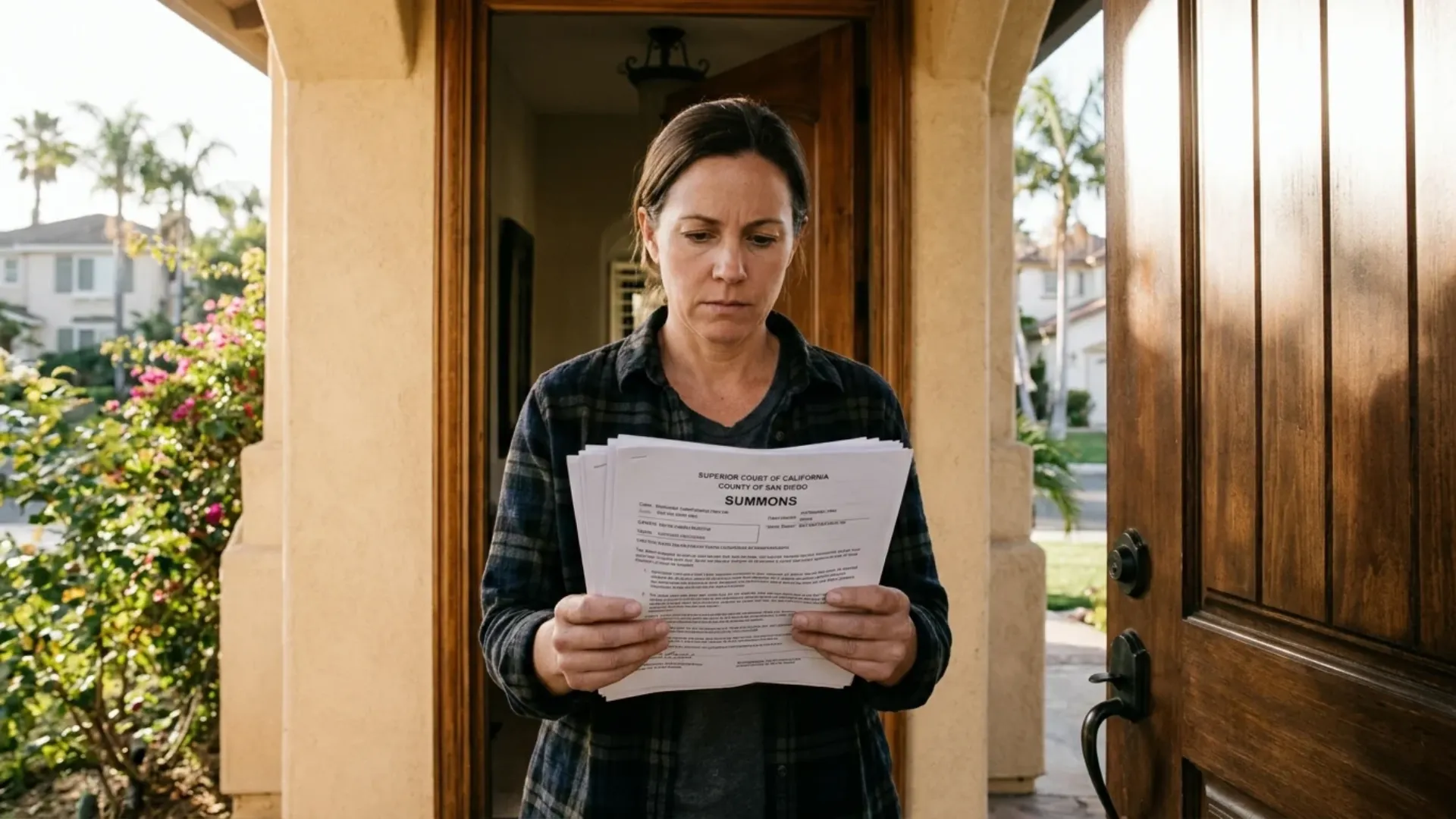
Someone handed you papers, or a process server showed up at your door, and your stomach dropped. Take a breath. A debt collection lawsuit is serious, but it isn’t the end, and you have a limited window to act.
In California you generally have 30 days to file a response, and if you miss it the other side can ask for a default judgment. Here’s how I walk people through the three real options.
What Happens After You’re Served in a San Diego Debt Collection Case
How long do you have to respond?
The summons tells you how long you have. In most California civil cases that’s 30 calendar days from the day you were served, and the clock doesn’t wait for you to hire someone. The response has to be filed with the San Diego Superior Court, and a copy has to be sent to the other side. Calling the collector and talking it out doesn’t stop the deadline.
Please read the summons itself and write the date you got it somewhere you’ll see it. If anything about the date or the papers is unclear, call before you guess.
What a default judgment does
If you don’t respond, the creditor can ask the judge to rule in its favor without hearing from you. That’s a default judgment, and it opens doors you don’t want open. The creditor can ask to take money from your bank account or garnish your paycheck. If you want to understand how that process looks, we explain it in our post on wage garnishment in San Diego.
A judgment can also add interest and court costs to the original amount. A $9,000 card balance can end up quite a bit larger by the time a judgment is entered.
Is the lawsuit even valid?
Not every suit stands on solid ground. Debt buyers sometimes sue without the paperwork to prove they own the account. Some debts are too old to sue on. Some papers get served on the wrong person or in the wrong way. A response can raise those points, and it forces the other side to prove its case instead of just assuming you’ll ignore it.
Who might be suing you
The name on the papers often isn’t the company you originally borrowed from. After a few months of nonpayment, many card issuers sell the account to a debt buyer for pennies on the dollar, and the buyer sues for the full balance. That matters, because a buyer has to show it actually owns your account and can document what you owed. When it can’t, the case gets weaker.
Read the complaint for three things: the name of the plaintiff, the account number or last four digits, and the amount claimed. Compare those to what you know. If any of it looks off, say so at the consultation. Details that seem small to you can matter a lot to a judge.

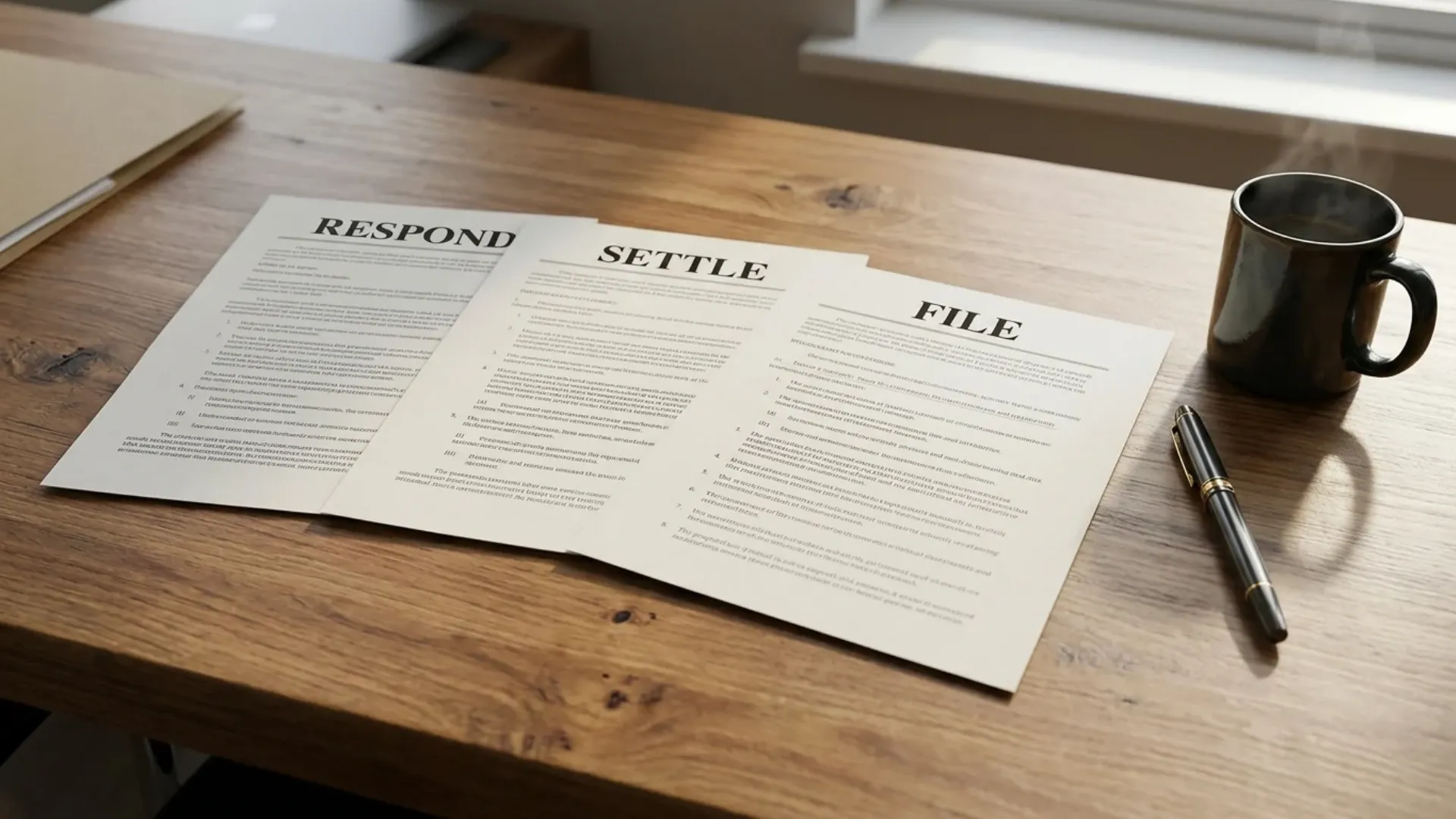
Your Three Options: Respond, Settle or File Bankruptcy
Option 1: respond and defend
If the debt isn’t yours, the amount is wrong, or the paperwork is missing, a response makes sense. You file in court, and the case moves forward. This option works best when you have a real defense, not just a hope that the creditor will lose interest. It also doesn’t solve your other debts.
Option 2: settle
Settlement means you and the creditor agree on a lower payoff or a payment plan, and the case ends. It can work when you have a lump sum available or a steady income that supports a payment plan. Two things to watch. Get any deal in writing before you send money. And remember forgiven debt can sometimes count as taxable income.
Settlement also fixes one debt. If you’re getting sued by one creditor, there’s a good chance the others are close behind.
Option 3: file bankruptcy
When you file, an automatic stay goes into effect, which tells creditors to stop collection efforts, including most lawsuits. The case in Superior Court generally pauses while your bankruptcy moves forward. In a Chapter 7 case, the credit card debt behind the lawsuit can be discharged, and the creditor can’t continue to collect it. In a Chapter 13 case, you propose a repayment plan over three to five years and can protect your property while you catch up.
If a judgment has already been entered, bankruptcy can still help. In some cases we can ask the court to remove a judgment lien from your home, which matters for homeowners in neighborhoods where equity has grown.
What the lawsuit looks like if you stay in the fight
If you respond, the case doesn’t end overnight. The other side may send written questions, ask for documents, and push toward settlement. You may be asked to show up at a hearing. For someone working two jobs or caring for a family, that’s a real burden, and it all runs while interest keeps accruing on the original debt.
That’s why I ask people to compare the full cost of defending with the full cost of a clean exit. A defense can be worth it when the claim is weak or the amount is large. But if you owe real money on several cards and the suit is one of many, spending months in court over one creditor can leave you worse off than a single filing that deals with all of them.
How bankruptcy changes the picture for homeowners and car owners
If you own a home or a car, a judgment can attach to your property as a lien, and that follows you when you sell or refinance. In a bankruptcy case, we can often address that lien and protect your equity under California’s exemption rules, depending on your numbers. Our page on Chapter 13 explains how a repayment plan can also catch up missed mortgage or car payments while the stay holds off creditors.
None of this works the same for everyone, which is why we don’t hand out a one size answer. A renter with no assets and a homeowner with equity face different risks from the same lawsuit.
What happens at your first consultation
We start with the papers. We confirm the date you were served, the deadline to respond, who is suing and how much they claim. Then we ask about your other debts, your income and what you own. From there we can tell you whether the case looks defensible, whether settling makes sense, or whether a bankruptcy filing would solve more than the lawsuit alone.
You don’t have to have your answer ready. Most people come in unsure and leave with a plan and a date.
How to Decide, and What to Do This Week
A quick way to sort your situation
Ask yourself four questions. How many creditors are you behind with? Is the lawsuit the only one, or the first of several? Can you realistically pay what’s being asked? Is your income steady enough to support a plan? If you’re facing one debt and have the money, settling may be the cleanest path. If you’re behind on several debts and income is tight, filing usually does more in one step.
Documents to gather
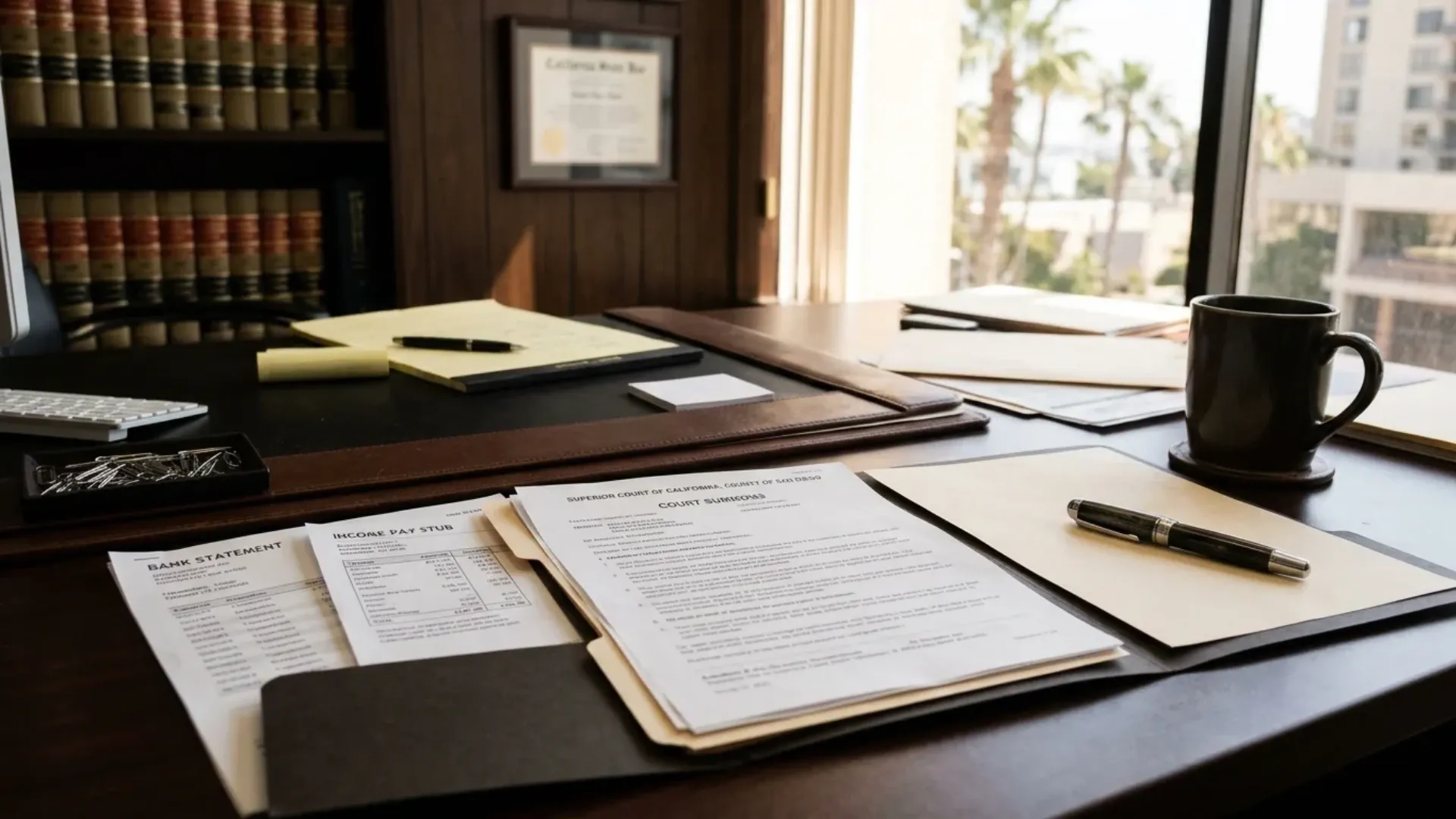
Bring the summons and complaint, any letters from the collector or its law firm, the last few statements from the original account, and proof of your income. If you were served recently, write down the date and the way you were served, whether by hand at your door or by mail.
What not to do
- Don’t ignore the papers or throw them out.
- Don’t pay a debt collector over the phone before you’ve confirmed what they’re actually owed.
- Don’t sign a settlement agreement you haven’t read.
- Don’t borrow from family or retirement to pay off one creditor while others are circling.
If calls and letters are piling up, our page on creditor harassment explains what collectors can and can’t do.
How to talk to a collector while you decide
You can ask a collector to confirm in writing who they are and what they claim you owe. You don’t have to discuss your finances on the phone, and you don’t have to agree to anything. If they threaten arrest, call your employer repeatedly or use abusive language, write down the date and what was said. Those facts can matter later.
Don’t Let a Deadline Make the Decision for You
Most people who get sued aren’t irresponsible. They’re people who hit a medical bill, a layoff or a rough year in an expensive city. The lawsuit is a deadline, not a verdict. If you act before the response date, you still have every option on the table. If you wait, the court may decide for you. Bring the papers to us, and we’ll go through them, explain the dates, and tell you which path fits.
Have a summons in your hand? Call us at 619-574-0551 before your response deadline passes. We offer a free consultation by phone, video or in person at 2341 Jefferson St, Suite 100 in San Diego, and a licensed attorney reviews your papers and your options with you.