
Cost is the question nearly everyone asks first, and it’s usually the reason people wait too long to call. You’re already behind on bills, so paying a lawyer feels backwards. Here’s the honest breakdown. The court charges a fixed filing fee. Attorney fees vary by case. And there are ways to spread the cost out.
Let me walk you through each piece so you can see the whole picture before you call anyone.
What You Pay the Court When You File in San Diego
Filing fees for Chapter 7 and Chapter 13
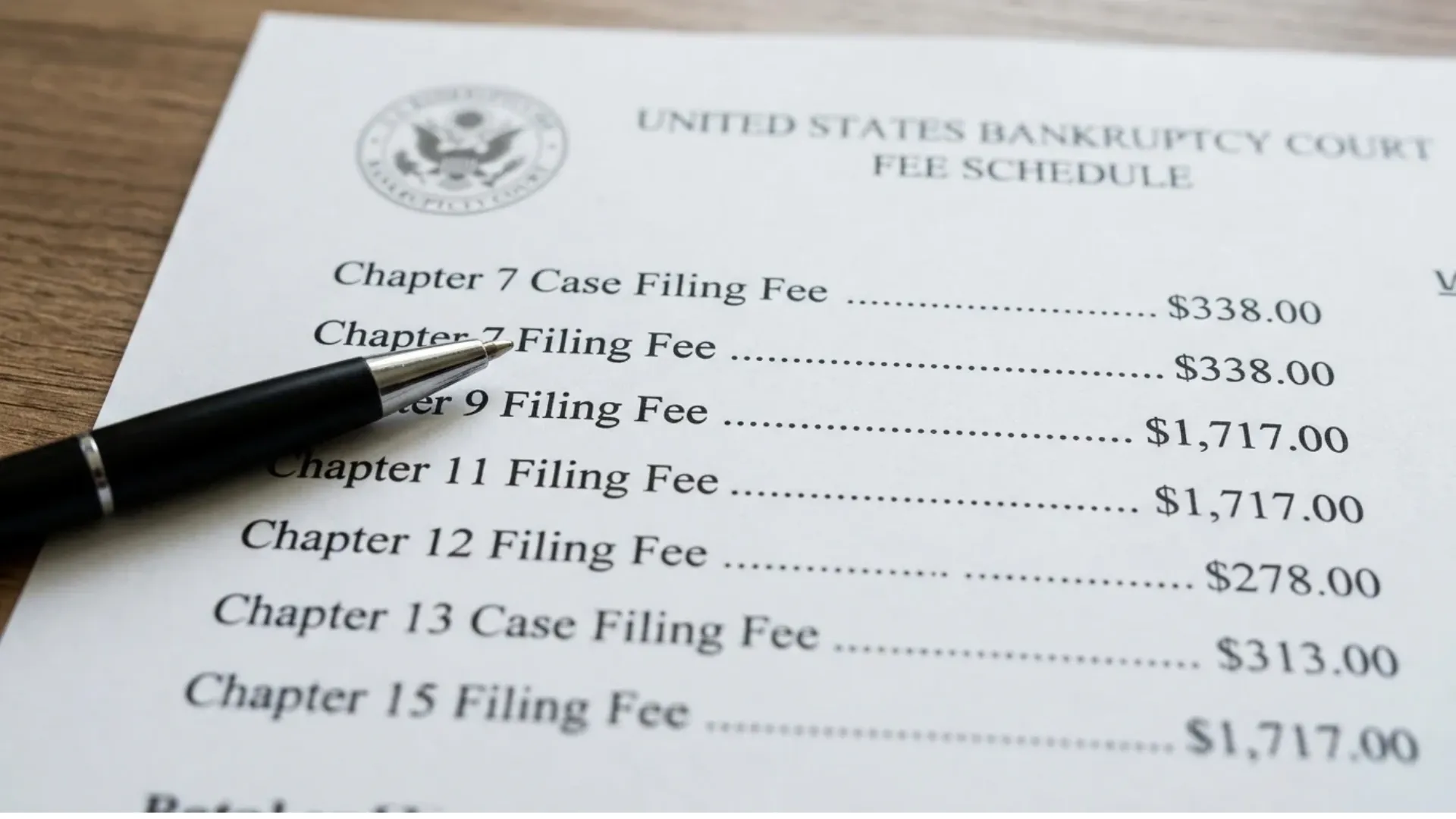
The Southern District of California charges $338 to file a Chapter 7 case and $313 to file a Chapter 13 case. Those figures come from the court’s own fee schedule effective December 1, 2023, and the court can change them, so we confirm the current amount when we file. Married couples who file together pay one fee, not two.
Paying the court fee in installments
In some situations, the court may approve paying the filing fee in installments. For Chapter 7, you request that with a court form when you file. If you miss installment payments, your case can be dismissed without a discharge, so it’s an option to use carefully and with a plan.
When the court may waive the fee
For Chapter 7, if your income is below 150 percent of the federal poverty guidelines, the court may waive the filing fee completely. You apply for the waiver when you file. Not everyone qualifies, but it’s worth asking about if your income is very low or you rely on benefits.
How Attorney Fees Work
Why they vary from case to case
There isn’t one flat price that fits every bankruptcy. The work depends on the chapter, how many creditors you have, whether you own a home or a business, whether you’re facing foreclosure or a lawsuit, and how organized your records are. A straightforward Chapter 7 with no property at risk takes less work than a Chapter 13 that runs through a three to five year plan. A business case is different again.
I’m not going to throw out a number here, because a number that doesn’t match your situation would just mislead you. What I can promise is that we explain our fee in writing before you hire us, and nothing about it is hidden.
Why a Chapter 7 fee is paid before you file
This surprises people. In a Chapter 7 case, the debts you owe at the time of filing are the ones that get discharged. A fee you owe your lawyer on that date would be one of them, so attorneys generally collect the fee before filing. That’s why payment plans for Chapter 7 are set up to be paid before the case is filed. In a Chapter 13 case the structure is different because your payments run through a plan, and we explain how that works for your situation at the consultation.
What the free consultation covers
Our first meeting is free, by phone, video or in person, and a licensed attorney is part of it. We review your income, debts, property and what creditors are doing, and tell you whether bankruptcy fits. If it does, we give you the total cost and talk through payment plans. If it doesn’t, you leave knowing that, at no cost.
Why Chapter 13 is priced differently
A Chapter 13 case runs three to five years, and the lawyer stays involved throughout. You file a plan, make monthly payments to a trustee, and the plan has to be reviewed and confirmed by the court. That’s more work over a longer time than a typical Chapter 7. It’s also the chapter people use to stop a foreclosure and catch up on a mortgage or car loan, so the cost has to be weighed against what it protects.
How fees are handled in a Chapter 13 case depends on the structure of your plan. We explain that for your case at the consultation, so you aren’t guessing.
What a payment plan looks like in practice
A payment plan simply breaks the attorney fee into smaller pieces, paid over a set period before the case is filed. We set it up so it fits your budget, and we don’t file until the agreed amount has been paid. If your situation is urgent, such as a pending foreclosure sale or a garnishment, tell us at the first call. We can talk about what’s possible when timing is tight.
How business cases are priced
If you own a business and are thinking about a reorganization or closing down, the cost picture is different. Business cases involve more documents, more creditors and more moving parts than a typical personal filing. That’s true whether you file under Chapter 11 or deal with business debts alongside your personal case. We discuss the scope of work and the fee structure with you before you commit.

The Smaller Costs and the Cost of Waiting
Other required costs
Every individual filer has to complete a credit counseling course before filing and a debtor education course before the case closes. Approved providers set their own prices, and many offer lower rates or waivers when income is low. You may also have small costs for things like a credit report or document copies. We tell you about these upfront.
What it costs to do nothing
Here’s the part nobody puts on a price sheet. Waiting has its own bill. Interest keeps adding up on credit cards. Late fees stack. A lawsuit can become a judgment, and a judgment can lead to garnished wages. Our article on what to know about the price of filing Chapter 7 covers other pieces of the picture. If you’re behind and getting calls, the cost of delay is often larger than the cost of acting.
Doing it yourself to save money
Some people consider filing without a lawyer to save money. It’s allowed. But the mistakes that happen, like leaving off a debt, missing a deadline or not protecting property you could have kept, can cost far more than the fee. We wrote about what local courts expect in filing for bankruptcy in San Diego, and it’s worth reading before you decide.
Questions worth asking any bankruptcy lawyer about cost
- What is the total fee, and what exactly does it cover?
- Is the court filing fee included or separate?
- What payment plans are available, and when does the case get filed?
- Does the fee cover meetings with the trustee and hearings?
- What happens if a creditor files a challenge or my situation changes?
- Will I get everything in writing before I pay anything?
A lawyer who is happy to answer these plainly is a good sign. If the answers come back vague, keep asking. Cost is not a rude question. It’s the question that shows whether you’re being treated fairly.
How to avoid paying more than you need to
Bring organized records. The more complete your paperwork is, the less time the firm has to spend chasing it, and that can matter for how smoothly the case goes. Gather your pay stubs, bank statements, tax returns, a list of your debts and anything from creditors or the court. And skip any service that asks for large upfront fees to promise results. Debt relief scams are common, and a licensed attorney won’t guarantee an outcome.

What the process looks like once you hire a lawyer
Knowing what you’re paying for makes the cost easier to judge. After the free consultation, you gather your documents, complete the required credit counseling course, and we prepare the petition and schedules. You review everything and sign it. We file the case, the automatic stay begins, and creditors are told to stop collection efforts. A few weeks later there’s a meeting with the trustee, which we attend with you. After that comes the discharge for qualifying debts. At every step, we handle the court and the creditors.
What you get for the fee
A fee covers more than filling out forms. It pays for a licensed attorney reviewing your whole situation, preparing and filing accurate paperwork, dealing with the trustee and creditors, attending the meeting of creditors and answering your questions along the way. If a creditor calls you after you’ve filed, you send them to us. That ongoing protection is a big part of what you’re paying for.
Don’t Let the Price Tag Keep You Stuck
Most of the people who call us say the same thing: I thought I couldn’t afford to file. Then they sit down, see the real numbers, and the picture changes. The court fee is fixed and may be spread out or waived. Our fee is explained before you commit, and payment plans exist. The only thing you can’t get back is time, and every month of waiting adds interest and risk. Call, ask your questions, and decide with the facts in front of you.
Want a written quote for your situation? Call us at 619-574-0551 to schedule a free consultation by phone, video or in person at 2341 Jefferson St, Suite 100 in San Diego. We’ll explain court fees, our fee and payment plan options before you commit to anything.