
A layoff hits twice. The paycheck stops, and the bills don’t. If you’re wondering whether to file bankruptcy now or wait, the answer often comes down to one detail most people haven’t heard about: the court looks back at six months of income, not just today’s. Your old paychecks can follow you into the decision.
Here’s how that works, and how severance and unemployment fit in for San Diego workers.
Why the Last 6 Months of Pay Matter More Than Today’s Income
How the Chapter 7 income test looks backward
To qualify for Chapter 7, most people with mostly consumer debts take a means test. That test starts with your average monthly income over the six full calendar months before the month you file. So if you lost your job in December but earned a full salary from July through November, a January filing still shows those higher months. Our guide to the Chapter 7 means test explains the steps in detail.
Your income today may be zero. The test doesn’t care yet, because it averages the past. That surprises a lot of people who lost their jobs and assume they automatically qualify.
A calendar example
Say you’re laid off on December 1, 2026. If you file in January 2027, the six months the court looks at are July through December 2026, which includes five months of full pay. If you file in July 2027, the window is January through June 2027, and none of your old wages are in it. Same person, same debt, very different average.
That doesn’t mean waiting is always smart. Creditors don’t pause while you wait. But it does mean the date you file is worth planning, not guessing.
Where California median income comes in
The average gets compared to the median income for a household your size in California. Those numbers update each year, so we check the current figures when we prepare your case. Below the median, you generally pass the first step. Above it, you aren’t automatically out. There’s a second part that allows certain expenses, and a Chapter 13 option is available if Chapter 7 isn’t.

What if your income is above the median?
Passing the first part of the test isn’t the only way in. If your average income is above the California median for your household size, we move to the second part, which allows certain expenses such as housing, taxes and some other necessary costs to be deducted. Many people who start above the line still qualify once those deductions are applied. And if Chapter 7 truly isn’t available, a Chapter 13 repayment plan can still stop collections and give you time to catch up.
That’s why I don’t tell anyone they’re too high to file from a quick glance at old pay stubs. The numbers need a real calculation.
How Severance, Unemployment and Final Pay Count
Severance
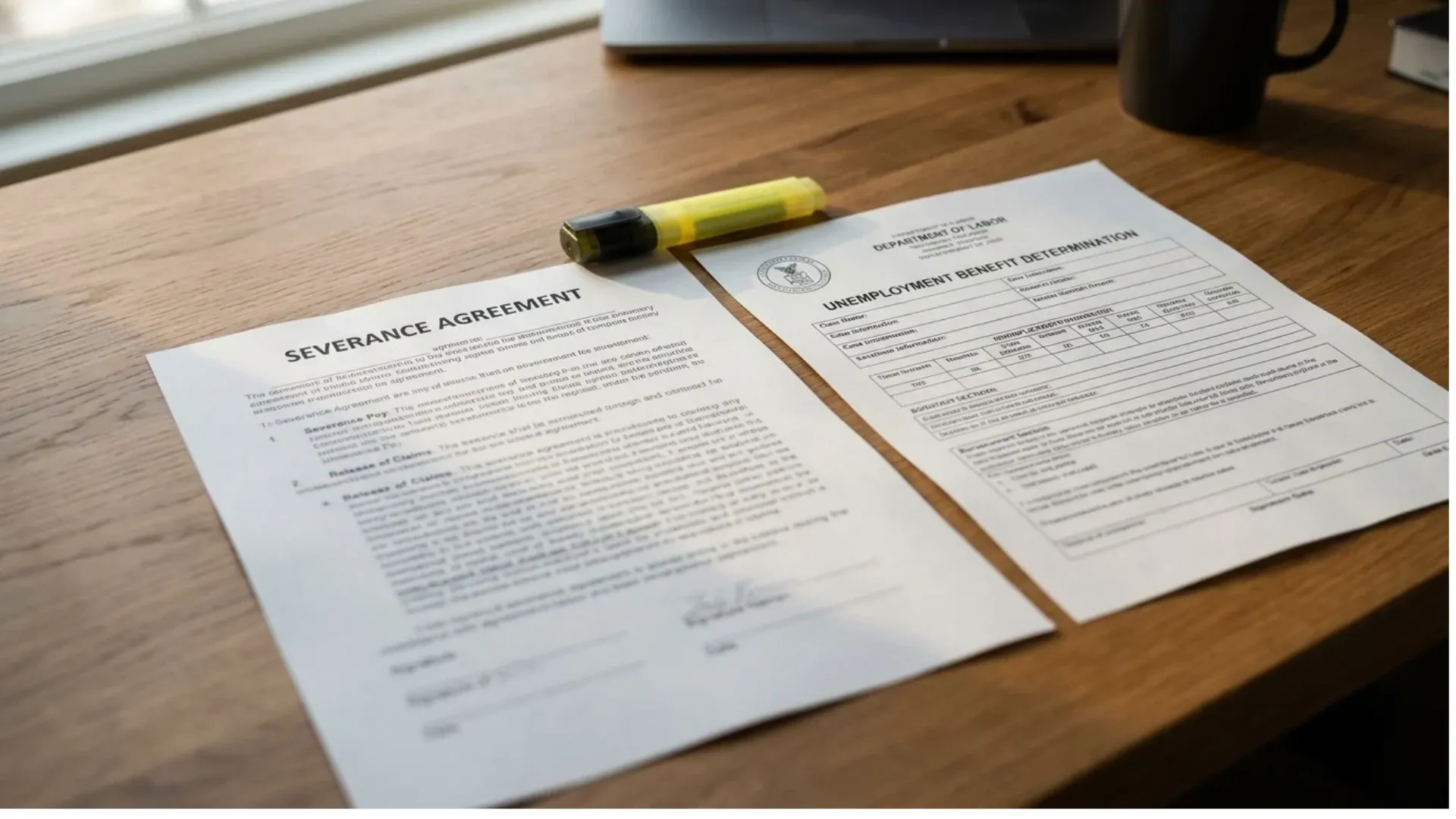
Severance counts as income in the month you receive it. If you take a lump sum, it can push one month of the six month average way up. If it’s paid out in installments, it spreads across more months. How the payment is structured can change the math, so bring your separation agreement to the consultation before you sign it if you still can.
Unemployment benefits
Unemployment is a trickier one. Courts have handled how it’s counted in the income test in different ways, so I don’t guess. We check it against current local practice for your case. Either way, bring the letter showing your weekly benefit amount and the dates you started receiving it.
Final paychecks and vacation pay
In California, final wages, including accrued vacation, are generally due when your employment ends. Those dollars count as income in the month you receive them, and any of it still sitting in your bank account on the day you file may need to be protected with an exemption. Our article on retirement accounts in bankruptcy covers what’s protected there, which matters if you’re thinking about tapping a 401(k).
What if you find a new job soon?
A new job changes your future income, but it doesn’t erase the six month look back. If you land work in February at a lower salary, a March filing still averages in the earlier months. If you’re hired at a higher salary than before, that can affect Chapter 13 too, because your plan payments are based on what you can afford. A quick new job is good news for your life, and a reason to review your timing.
How Chapter 13 handles a layoff
In a Chapter 13 case, the plan payment is based on what you can actually afford, so a layoff can be reflected in the plan. If your income has dropped, your monthly payment can be set lower, and the plan can be adjusted if your situation changes. Chapter 13 also stops foreclosure and lets you catch up on missed house or car payments over time. It’s often the right fit if you’re behind on a mortgage and expect to be working again soon.
Rent, car payments and utilities while you wait
If you’re waiting for a better filing date, keep the roof over your head first. Pay rent or the mortgage, the car if you need it for work, utilities and insurance. Call your landlord or lender early and ask about a short hardship arrangement. Many will work with someone who contacts them before they fall behind. Put any agreement in writing.
If a lawsuit or foreclosure is already moving
When a court date or sale date is on the calendar, waiting for a lower income average isn’t an option. The automatic stay can stop a lawsuit, garnishment or foreclosure sale the moment a case is filed, and that may be more important than the means test math. We look at every deadline on your plate first and plan around the earliest one.
What to Do in the First Weeks After a Layoff
Protect your cash and your retirement money
The most common mistake I see after a layoff is draining a retirement account to keep paying credit cards. That money is often well protected in bankruptcy, and the cards may be erasable. You’d be giving up protected savings to pay debts that could have been discharged. Before you withdraw anything, talk to us.
Don’t pay unsecured debts first
When income drops, it makes sense to pay for housing, food, utilities, insurance and transportation before credit cards and medical bills. Those priority bills keep your life running. Card companies can be dealt with later, in or out of bankruptcy.
Know the signs it’s time to talk to a lawyer
- You’ve gotten a lawsuit or summons.
- Collectors are calling you at work or at home.
- You’re using one card to pay another.
- Your savings will run out in two or three months.
- Your mortgage or rent is already behind.
Any one of these is enough reason to call. Some people file within weeks of a layoff because the lawsuit or foreclosure clock leaves them no choice. Others plan a few months ahead. Both can be the right call.
What to bring
Bring pay stubs for the last six months, your termination or severance papers, unemployment benefit letters, last year’s tax return and a list of your debts. With those in hand, we can tell you what your average looks like and when the calendar works for you.
Special considerations for San Diego workers
San Diego’s job market leans on tourism, defense, biotech and construction, and many of those jobs come with bonuses, commissions or seasonal pay. Those payments count too. If you’re a contractor or a gig driver whose work dried up, your income history may look different from a salaried worker’s. If you’re in the military community or hold a security clearance, tell us at the start, because that can affect how we plan your case.
And if your job loss is part of a wider downturn in your industry, say so. It helps us understand which creditors are likely to push hard and which may be willing to wait.

Do you have to file right away?
No. Plenty of people take a month or two to breathe, look for work and see how the numbers settle. What matters is that you make that choice on purpose. If no lawsuit is pending and you can keep up with essentials, a short wait may leave you in a better spot. If creditors are escalating, waiting costs more. We help you tell which of those you’re in.
A Layoff Is a Setback, Not a Verdict on You
Losing a job in San Diego, where rent and gas never stop climbing, can shake anyone. It doesn’t mean you handled money badly. It means something outside your control changed the math. A short, honest conversation about your dates and your numbers can turn panic into a plan, and sometimes the plan is simply to wait a few months. Sometimes it’s to file this week. Bring us your papers and we’ll show you what the calendar says, and what each choice means.
Recently laid off? Call us at 619-574-0551 for a free consultation by phone, video or in person at 2341 Jefferson St, Suite 100 in San Diego. Bring your pay stubs and separation papers, and we’ll look at your dates and tell you when and whether filing fits.