The meeting of creditors, also called the 341 meeting, scares more people than the filing itself. It sounds like a courtroom grilling. It isn’t. It’s usually a short video call with a trustee who asks routine questions about your paperwork. Judges don’t attend, and creditors rarely show up.
Here’s how it works in San Diego, what gets asked, and how to be ready so the call feels routine.
How the 341 Meeting Works in San Diego and Imperial County
It’s held by video, not in a courtroom
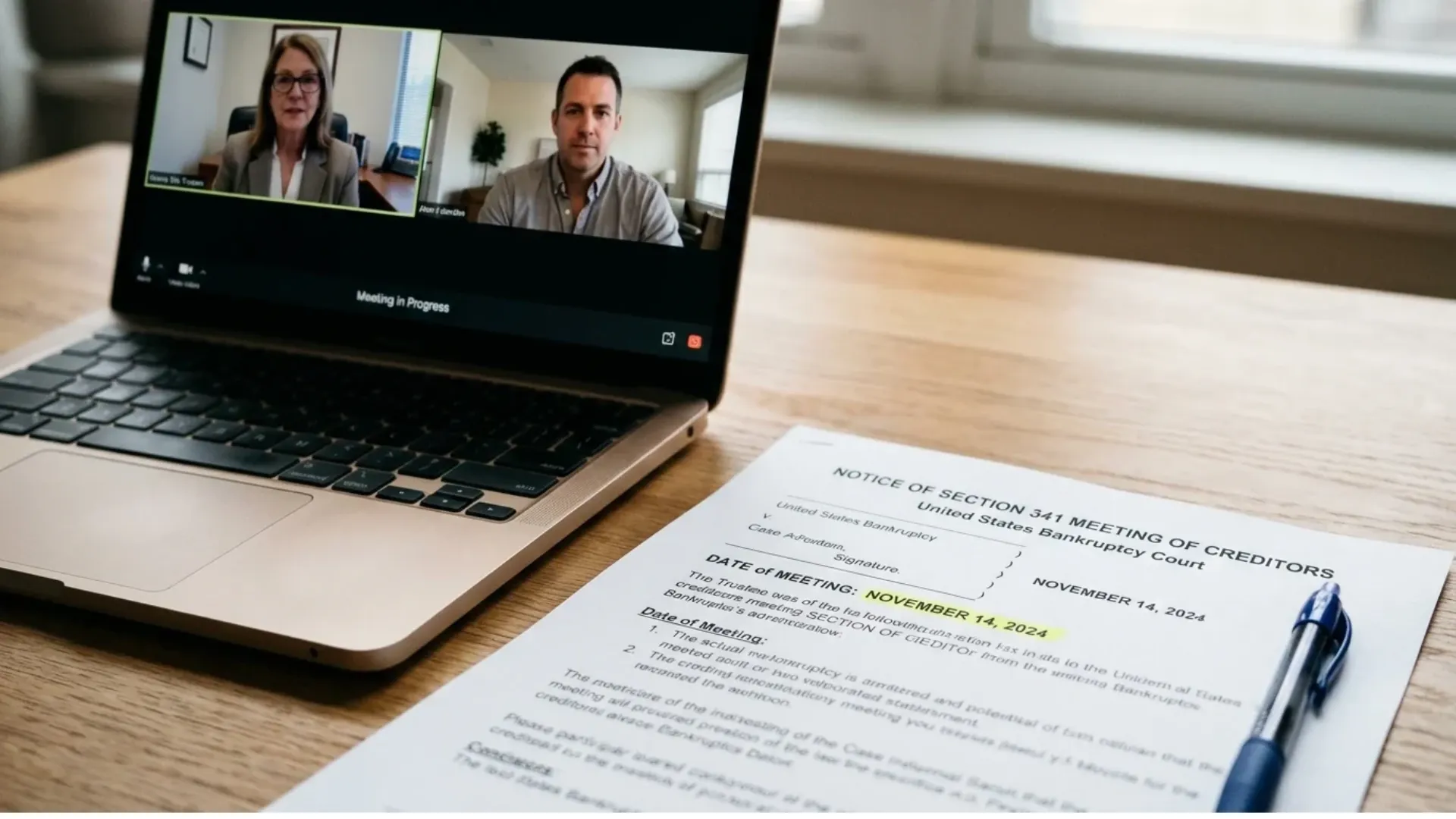
For Chapter 7, 12 and 13 cases filed on or after July 1, 2023, the U.S. Trustee’s Region 15 office holds meetings for San Diego and Imperial County by Zoom. Chapter 11 meetings are by phone, and an in person meeting is the exception. The trustee’s notice tells you the exact format, so read it carefully and check it again a few days before your date.
If you’re filing from El Centro or elsewhere in Imperial County, the process is the same. Our article on filing for bankruptcy in El Centro covers the local details.
When it happens
In a Chapter 7 case, the meeting is typically scheduled about 21 to 40 days after you file. You’ll receive a notice with the date and time, and we’ll go over it with you. Our guide to how long bankruptcy takes in San Diego shows where the meeting fits in the full timeline.
Who attends
You attend, and so does the trustee, who is an independent person appointed to review your case. Your attorney attends with you. Creditors are allowed to join and ask questions, but they rarely do. Most meetings take only a few minutes.
What the Trustee Asks and What You Need to Have Ready
Proof of who you are
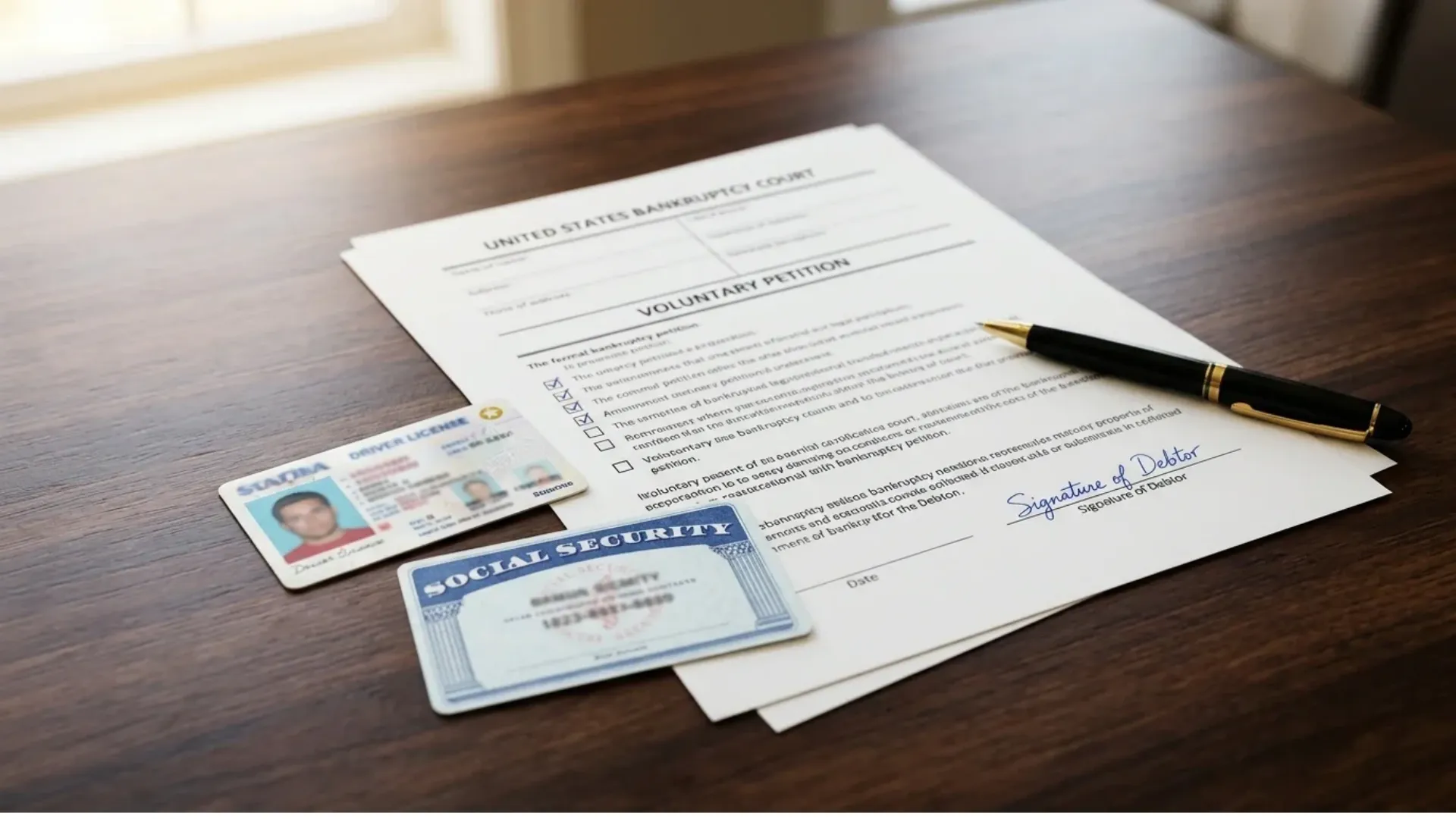
You’ll be asked to show a government issued photo ID and proof of your Social Security number. Have both in hand before the call starts. The trustee confirms who you are, and then you’re placed under oath, which means you swear to tell the truth.
Questions about your paperwork
The trustee reviews the petition you signed. Expect questions like these:
- Did you read and sign the petition, and is everything in it true and complete?
- Is your name and address correct, and have you listed all of your debts?
- Do you own any property that isn’t listed, such as a car, real estate or a bank account?
- Have you sold, transferred or given away anything in the last few years?
- Do you expect any tax refund, inheritance, lawsuit payment or other money in the near future?
- Has anything changed since you filed?
Answer honestly and simply. If you don’t know something, say so instead of guessing. We’ll go through these questions with you beforehand so none of them is a surprise.
Documents the trustee may ask for
The trustee typically wants your most recent tax return before the meeting, and may ask for recent pay stubs and bank statements. We collect these when we prepare your case so they’re ready on time. If the trustee requests something extra, we help you get it quickly. Delays here can slow your case down.
What happens if something goes wrong
Sometimes the trustee has a follow up question, spots a missing document or asks to continue the meeting to another date. That’s not a failure. It usually means one more piece of paper is needed. For the bigger picture of where the meeting sits in your case, see how filing Chapter 7 works in San Diego. We respond quickly, and in most cases the case moves forward after the missing item is supplied.
What does cause problems is a missed meeting, a wrong answer that you knew was wrong, or an asset left off the petition. If you realize at any point before the meeting that something is missing or wrong, call us right away. Corrections made early are routine. Surprises at the meeting are harder.
What if you have a disability, a language barrier or no good internet?
Tell us as soon as you get your meeting notice. If you have a hearing or vision difficulty, need an interpreter or don’t have a reliable connection at home, there are options, and the trustee’s office can often make arrangements if it knows in advance. Our office serves a bilingual community, and we want you to understand every question you’re asked. You can also tell us if you’d prefer to join from our office, so we can set that up.
How Chapter 13 meetings differ
In a Chapter 13 case, the meeting usually happens a bit later, typically within about 21 to 50 days after filing. The trustee asks many of the same questions, and also reviews your repayment plan, your income and whether your payments are realistic. The trustee may ask about your budget and your ability to keep up with plan payments. We prepare you for those questions too.
What a typical exchange sounds like
The trustee might say: please state your name and address for the record. You answer. Next: did you review your petition before signing it, and is it true and correct? You say yes. Then: do you own anything that isn’t listed? No. Have you transferred any property in the last few years? No. Do you expect a tax refund or an inheritance? You answer honestly. That’s about it. It sounds formal, but it’s mostly confirmation of what’s already on paper.
If you’re filing with your spouse
In a joint case, both spouses attend and are asked questions, usually on the same call. Both need photo ID and proof of Social Security number. Sit where both of you are on camera, and let each spouse answer for themselves.
How to Prepare So the Meeting Goes Smoothly
Do a tech check
Test your Zoom link the day before. Use a phone or computer with a working camera and microphone, in a quiet room, with a stable internet connection. Log in a few minutes early. Keep your ID and Social Security card or proof within reach.
What not to do
- Don’t skip the meeting. Missing it can get your case dismissed.
- Don’t change your answers because you’re nervous. If your paperwork is wrong, tell us before the meeting so we can fix it.
- Don’t sell, give away or move property between filing and the meeting without asking us.
- Don’t have someone else answer for you.
Many of the same cautions come up before the case is even filed, and we list them in our guide to filing for bankruptcy in San Diego.
What happens after
In most Chapter 7 cases, the trustee ends the meeting that same day if everything is in order. Creditors then have a limited time to object, and if no one does, the case moves on toward discharge. Sometimes the trustee continues the meeting to another date to ask for more documents. That’s common and not a sign anything is wrong.
What we do on the day
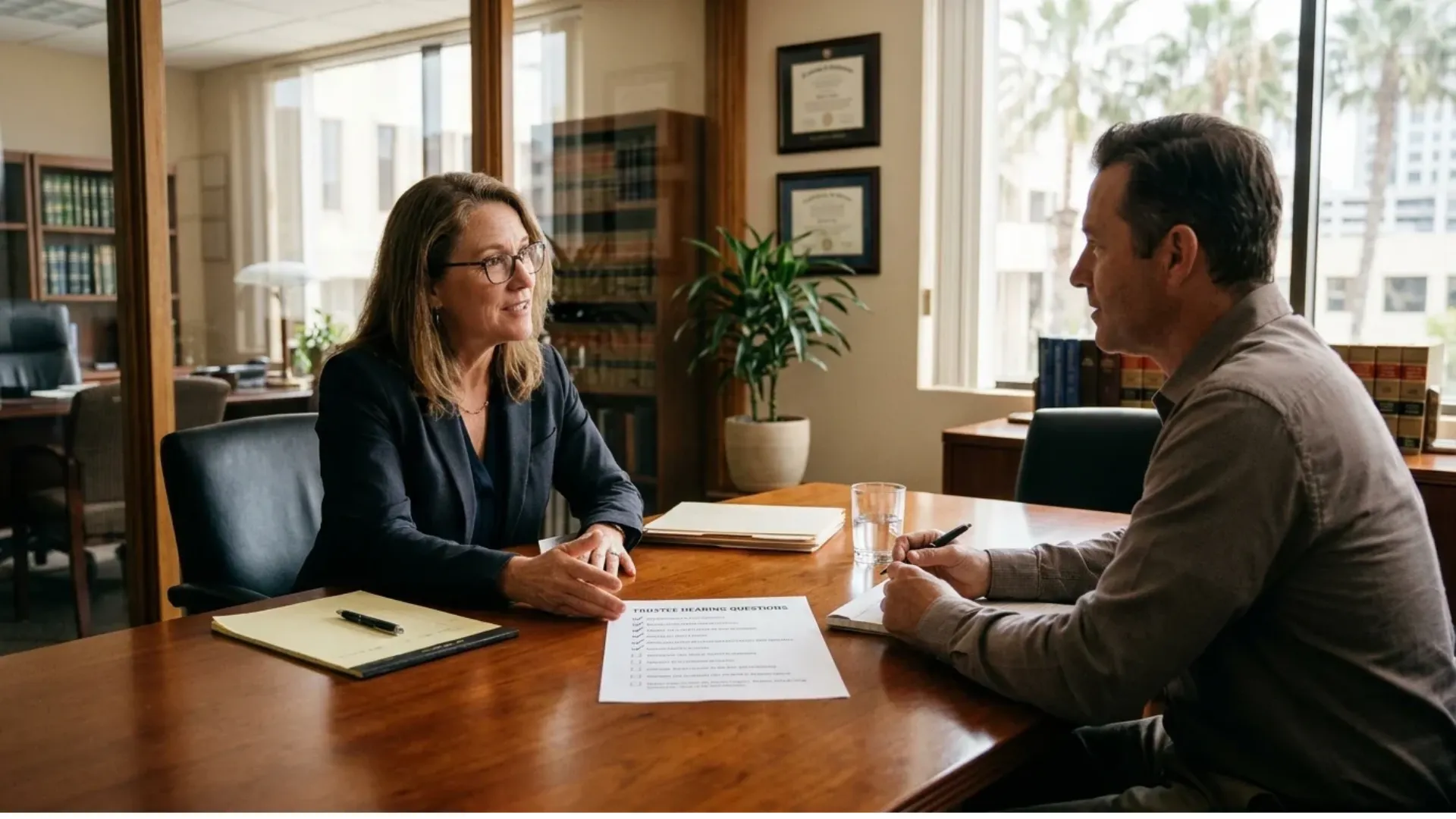
We log in with you a few minutes early, confirm your ID and make sure your audio is working. During the meeting, the trustee asks the questions and you answer. We’re there to make sure the process stays fair and clear, and to help if a question is confusing. After the meeting, we tell you what happens next, including whether the trustee needs anything else and what the next date in your case will be.
If you’ve been putting off a filing because the meeting scares you, don’t let it keep you stuck. It’s one of the shortest and most routine parts of the whole process.
Where to sit and what to wear
Pick a quiet spot with good light and nothing distracting behind you. Dress the way you’d dress for a doctor’s appointment, neat and comfortable. Silence your phone, close other tabs and let family members know you’ll be on a call. If you share a small apartment, headphones help. The trustee isn’t judging your home, only making sure the call is clear.
A Few Minutes on a Screen, With Us Beside You
When people tell me they’re afraid of the meeting of creditors, I get it. It’s the one moment where the process feels personal. But it’s one of the shortest parts of the whole case. You’ll answer plain questions, with your attorney there, from your own home. If you prepare, it’s often over before your coffee gets cold. We handle the trustee, the paperwork and the follow up, so you don’t have to face any of it alone, and you walk away knowing what happens next.
Have a 341 meeting coming up, or worried about one? Call us at 619-574-0551 for a free consultation by phone, video or in person at 2341 Jefferson St, Suite 100 in San Diego. We prepare you for the trustee’s questions and attend the meeting with you.